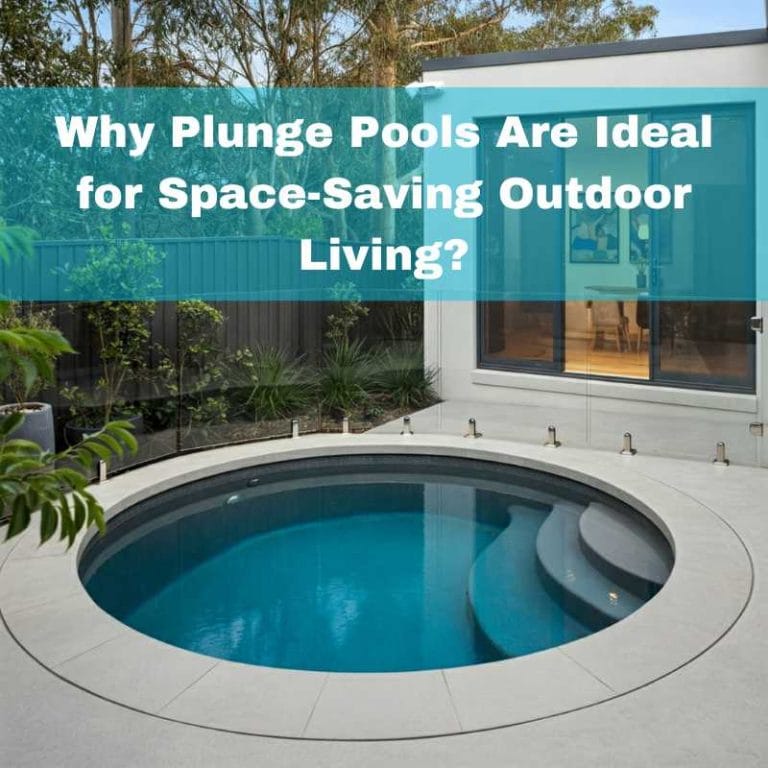
Why Deck-Mounted Plunge Pools Are Growing in Popularity
Outdoor living is a staple of Australian lifestyle, and homeowners across Brisbane, Sydney, and Melbourne are increasingly looking to maximise compact outdoor spaces. A deck-mounted plunge pool offers a visually striking solution, especially for properties with elevated entertaining areas or limited ground-level space.
The demand has grown alongside the popularity of precast plunge pools, which are compact, factory-built units that can be craned into position rather than excavated on site. You can explore the full precast plunge pools guide to understand why these models are often preferred for elevated or deck-level placements.

The Weight Problem: What Most Homeowners Underestimate
This is where most projects run into trouble. Water is heavy. One kilolitre (1,000 litres) of water weighs exactly 1,000 kg. A modest 3m x 2m plunge pool filled to a depth of 1.2 metres holds approximately 7,200 litres, meaning you are placing over 7 tonnes of load onto your deck before accounting for the shell, any surrounding coping, or the weight of people using it.
Standard residential decks in Australia are typically engineered to carry 1.5 to 4 kiloPascals (kPa) of live load, which is nowhere near sufficient for a filled pool. A structural engineer must assess and potentially redesign the deck’s bearer and joist system, footing sizes, and post specifications before any pool is installed.
Key structural considerations include:
- Footing depth and diameter: Larger pad footings or piers are often required
- Bearer sizing: Doubled or steel-replaced bearers may be needed beneath the pool zone
- Bracing and tie-downs: Lateral loads must be managed, particularly in high-wind areas
- Concrete slab requirements: If the deck sits on a concrete base, reviewing concrete slab thickness is a critical first step before proceeding
The Australian Building Codes Board sets minimum standards through the National Construction Code (NCC), and any structural modification must comply with AS 1684 for timber-framed construction or relevant steel framing standards.
Permits, Fencing, and Council Approval
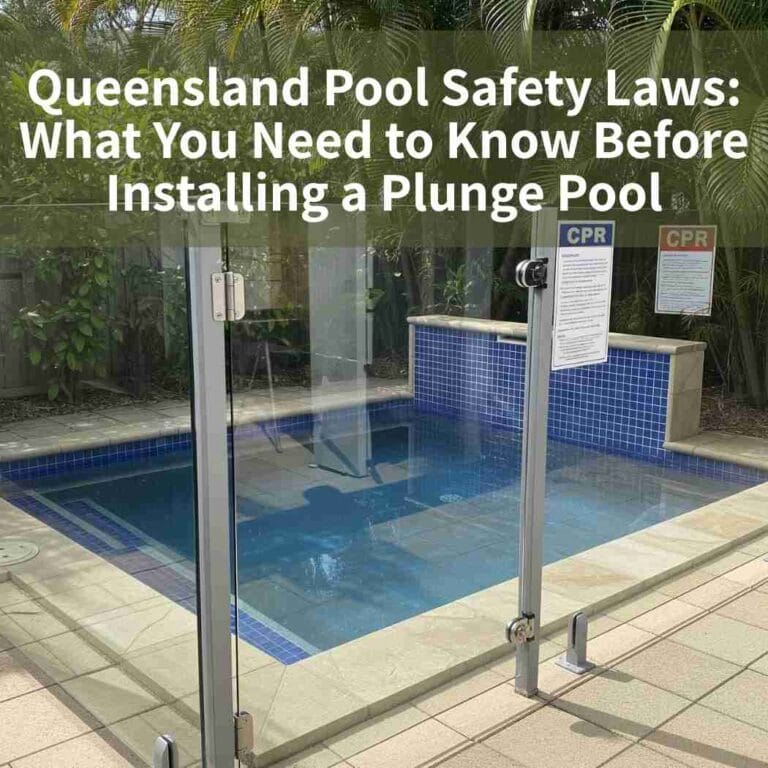
Placing a pool on a deck does not exempt you from pool fencing laws. Under Queensland’s pool safety legislation, any pool capable of holding more than 300mm of water must be enclosed by a compliant safety barrier, regardless of whether it sits in the ground or on a deck.
You will also need a development approval (DA) or building approval depending on your local council’s requirements. Some councils classify deck-mounted pools differently to inground installations, so it pays to check with your local authority before committing to a design. In Brisbane, Brisbane City Council provides guidance on pool fencing approvals and building permits online.
When comparing pool types for a deck installation, the spa pool vs precast plunge pool comparison is worth reading, since spa pools are generally lighter and may place less structural demand on a deck than a full precast concrete shell.
What It Costs and Who to Call
Budget expectations vary widely. For a precast unit on an engineered deck in Brisbane, total project costs including the pool shell, deck modification, engineering, fencing, and installation can range from A$25,000 to A$60,000 or more. To build an accurate budget, reviewing plunge pool cost brisbane gives you a solid breakdown of what each component typically costs.
For sloped sites where a deck-level pool makes particular sense, the resource on precast plunge pools on sloped sites explains how to manage excavation, retaining, and installation as one coordinated scope.
Plunge Pools Brisbane specialises in precast plunge pool installation, offering both above-ground and inground styles to suit a range of site conditions, including elevated deck applications. Their team can advise on which product suits your specific deck configuration.
Things to Know
- A structural engineer’s report is non-negotiable before any deck-mounted pool installation
- Precast pools are often lighter than poured concrete shells, making them more practical for deck placement
- Pool fencing laws apply regardless of whether the pool is inground or deck-mounted
- Craning a precast unit into a backyard requires clear access, which affects site planning significantly
Conclusion
A deck plunge pool is right for you if your structure can handle the load, your site limits ground installation, and you are prepared for the added cost. If not, a ground install is the safer choice.
If you are thinking about adding a plunge pool to your deck, the safest first step is expert advice. At Plunge Pools Brisbane, we help homeowners design, engineer, and install pools that meet local standards and suit their space.
Ready to Commission Your Deck Pool Assessment?
Contact a licensed structural engineer in your area and request a specific load assessment for your proposed pool dimensions. Bring the pool manufacturer’s specifications, including shell weight, water volume, and footprint, to that meeting so the engineer can work from accurate figures.
Frequently Asked Questions
Do I need council approval to put a plunge pool on my deck?
Yes, building approval and pool safety compliance are required in most Australian states.
In Queensland, you need both a building approval for any structural changes and a pool safety certificate once the fence is installed. Check with your local council as requirements vary by location.
How much does it cost to engineer a deck for a plunge pool in Brisbane?
Structural engineering fees typically range from A$1,500 to A$4,000 depending on complexity.
This does not include the cost of physical modifications to the deck, which can add several thousand dollars more depending on the extent of reinforcement required.
Can a composite deck support a plunge pool without reinforcement?
No, composite decks are not built to pool-load specifications and will require structural upgrades.
Even premium composite decking products are designed for pedestrian loads only. The subframe beneath the decking surface must be independently engineered to carry water and shell weight.
Are above-ground plunge pools safer for decks than inground styles?
Above-ground precast units can be positioned onto a deck without excavation, which simplifies the process but does not eliminate load concerns.
The pool still weighs several tonnes when full. An engineer must verify the deck can handle the load regardless of whether the pool is above-ground or partially inground. According to Healthdirect Australia, pool safety measures should always be prioritised alongside structural planning.
What type of plunge pool is best suited to a deck installation?
Precast fibreglass or fibreglass-composite shells are generally the most practical choice for deck placements.
They are lighter than p