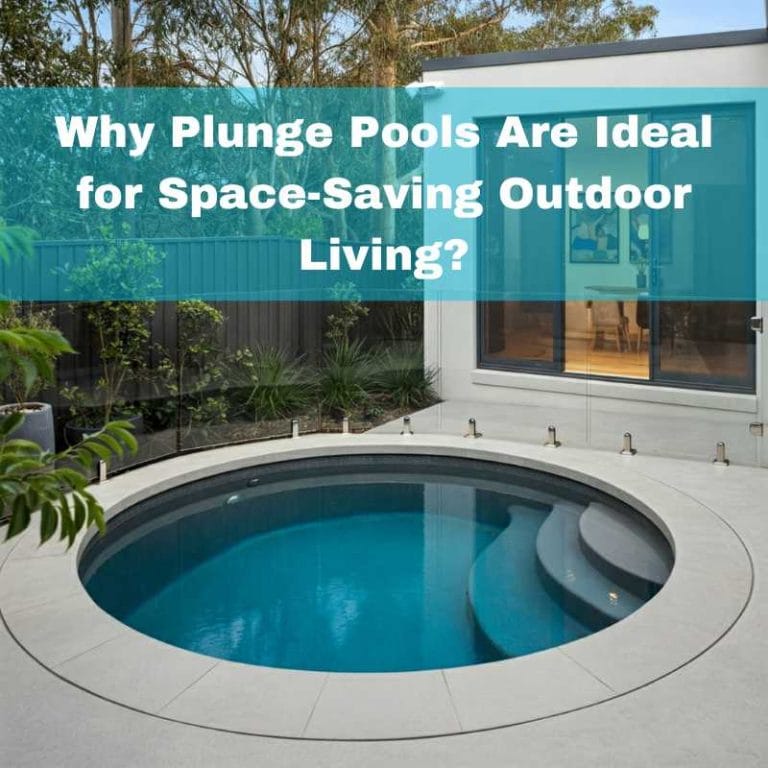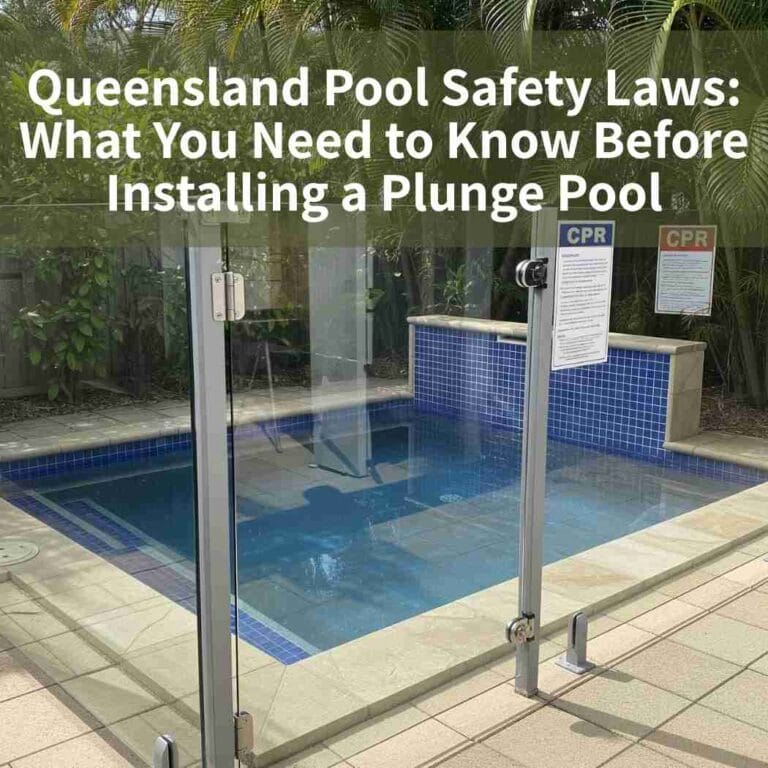
For some Brisbane homeowners, a precast plunge pool is the quickest and most practical solution. It’s manufactured off-site, delivered to your property, and installed in just a matter of days once the site is ready. Others may benefit more from a custom concrete pool, particularly if they have a sloping block, limited access, or want a unique design that can’t be achieved with standard pool sizes.
The right choice depends on more than your budget. Factors such as backyard access, ground conditions, engineering requirements, installation timeframes, and your long-term plans all play an important role in determining which option is best suited to your property.
In this guide, we’ll compare custom and precast plunge pool installations step by step, including how each pool is built, typical costs, access requirements, construction timelines, maintenance considerations, and the types of backyards each option suits best. By the end, you’ll have a clear understanding of which installation method is the right fit for your Brisbane home.
At a Glance: Custom vs Precast Plunge Pools
If you’re deciding between a custom and precast plunge pool, here’s a quick overview of how they compare. While both provide a durable, long-lasting concrete pool, they differ in how they’re built, installed, and suited to different backyards.
| Feature | Precast Plunge Pool | Custom Concrete Plunge Pool |
|---|---|---|
| Construction | Manufactured off-site as a single concrete shell | Built on-site using reinforced concrete |
| Installation Time | Typically 2–7 days after delivery | Usually 6–12 weeks depending on complexity |
| Design Flexibility | Standard sizes and shapes | Fully customised size, shape and depth |
| Upfront Cost | Generally lower | Typically higher |
| Access Requirements | Requires truck and crane access | Better suited to properties with limited access |
| Engineering | Factory engineered before delivery | Individually engineered for the site |
| Best Suited For | Standard suburban blocks and faster installations | Sloping blocks, difficult sites and bespoke designs |
| Long-Term Durability | Excellent | Excellent when properly constructed |
| Maintenance | Similar routine maintenance requirements | Similar routine maintenance requirements |
While this comparison provides a helpful starting point, the best option depends on your property’s layout, your budget, and what you want from your outdoor space. The sections below explain these differences in more detail so you can make an informed decision.
What Is a Precast Plunge Pool?
A precast plunge pool is a concrete pool that’s manufactured in a controlled factory environment before being transported to your property as a single unit. Once the site has been prepared, the pool is lifted into position using a crane, connected to the plumbing and electrical systems, then finished with coping, paving or decking.
Because the shell is built before it arrives on-site, the installation process is significantly faster than a traditional custom concrete pool. Most manufacturers also offer a selection of standard shapes and sizes, making precast pools a practical option for many Brisbane backyards.
Precast plunge pools are often a good choice if you:
- Want a faster installation with less on-site construction.
- Have a backyard that can accommodate crane access.
- Prefer a more predictable project timeline and budget.
- Are happy choosing from a range of proven pool designs.
Although you’re selecting from pre-designed shells, you can still personalise the finished look with your choice of coping, interior colour, waterline tiles, paving, decking, landscaping and pool equipment.
What Is a Custom Concrete Plunge Pool?
A custom concrete plunge pool is built entirely on your property. Instead of arriving as a completed shell, the pool is constructed from the ground up using reinforced concrete, allowing it to be tailored to your exact site and design requirements.
This construction method offers far greater flexibility than a precast pool. You can customise the dimensions, depth, shape and internal features to suit your backyard, whether you’re working with a compact courtyard, a sloping block or a larger outdoor entertaining area.
A custom plunge pool is often the better option if you:
- Want complete freedom over the pool’s design.
- Have a difficult site with limited or restricted access.
- Need a pool that fits unusual dimensions or boundaries.
- Plan to include features such as integrated seating, spas, infinity edges or custom finishes.
While a custom pool usually takes longer to build and costs more than a precast alternative, it provides the flexibility to create a pool that’s designed specifically for your home rather than adapting your backyard to fit a standard shell.
Which Installation Process Is Faster?
If getting your pool installed quickly is a priority, there’s a clear difference between the two construction methods.
A precast plunge pool is built off-site while your backyard is being prepared. Once the excavation and base are complete, the pool shell is delivered, craned into position, connected to the required services, and finished with landscaping. In many cases, the on-site installation can be completed within a few days.
A custom concrete plunge pool follows a longer construction schedule because every stage is completed on your property. The pool must be formed, reinforced, concreted, cured, waterproofed and finished before it can be filled with water. While this takes more time, it also provides complete design flexibility.
Typical Precast Installation Timeline
- Consultation and site inspection
- Engineering and manufacturing
- Site preparation and excavation
- Pool delivery
- Crane installation
- Plumbing and electrical connections
- Landscaping and handover
Typical Custom Installation Timeline
- Consultation and design
- Engineering and approvals (where required)
- Excavation
- Steel reinforcement and formwork
- Concrete construction and curing
- Interior finishes
- Plumbing and electrical installation
- Landscaping and handover
Keep in mind that every project is different. Weather conditions, site access, engineering requirements and the complexity of the design can all influence the overall installation timeframe.
Step-by-Step Installation Process
Whether you choose a precast or custom plunge pool, every project follows the same broad stages, from planning and excavation through to plumbing, landscaping and handover. The main difference is how the pool shell is built and installed.
Understanding each stage helps you know what to expect throughout the project and where the two installation methods begin to differ.
Phase 1: Planning Your Project
Every successful pool installation starts with careful planning. Before construction begins, your builder will assess your property and discuss the best solution based on your backyard, budget and lifestyle.
During this stage, you’ll typically:
- Choose the pool type, size and location.
- Assess site access for machinery and deliveries.
- Review engineering or soil requirements.
- Discuss pool equipment and optional features.
- Confirm the project timeline and quotation.
If approvals are required for your project, these are generally organised before any excavation begins. Investing time in the planning stage helps avoid unexpected delays and ensures the installation runs as smoothly as possible.
Phase 2: Site Assessment and Preparation
Before any excavation begins, your builder will carry out a detailed site assessment to confirm that your property is suitable for the chosen pool. This step helps identify potential challenges early, reducing the risk of delays or unexpected costs during construction.
The assessment typically includes:
- Measuring the available installation area.
- Checking access for machinery, delivery trucks or cranes.
- Locating underground services such as water, sewer and electrical lines.
- Assessing soil conditions and site levels.
- Confirming where the filtration equipment will be installed.
Once the assessment is complete, excavation can begin. The hole is dug slightly larger than the pool to allow room for levelling and backfilling. A compacted crushed rock base is then installed to provide a stable foundation for the pool shell.
Easements and Underground Infrastructure
Before installation, it’s important to confirm whether your proposed pool location is affected by sewer, stormwater, or water infrastructure.
If the pool is located over or close to a sewer main or easement, additional approval from Urban Utilities may be required before construction can begin. Depending on the location, this can involve engineering assessments, amended pool positioning, or structural protection works.
Identifying easements during the planning stage can help avoid costly redesigns and unexpected delays later in the project.
Navigating Brisbane Soil and Engineering Requirements
Ground conditions vary across Brisbane, and they play an important role in how a plunge pool is designed and installed. Many suburbs contain reactive clay soils that expand during wet periods and shrink as they dry, placing additional pressure on pool structures over time.
Precast plunge pools are manufactured in controlled factory conditions and engineered to withstand transport and lifting, resulting in a strong, reinforced concrete shell.
Custom concrete pools are engineered specifically for your property. If soil tests identify reactive clay, sloping ground or other site challenges, the engineer may specify additional reinforcement, deeper footings or other structural measures to suit the conditions.
A proper site assessment ensures the pool is designed for your backyard, helping deliver long-term structural performance regardless of which installation method you choose.
Phase 3: Excavation
Once the site has been prepared, excavation begins. While both pool types require digging, the construction process starts to differ from this point.
For a precast plunge pool, the excavation is carefully measured to match the dimensions of the factory-built shell. After the hole is excavated, a compacted crushed rock base is installed and levelled to support the pool evenly. Accuracy is essential because the shell arrives as a finished structure.
For a custom concrete plunge pool, the excavation provides the foundation for the entire build. The hole is shaped to suit the engineered design, allowing room for reinforcement, formwork and concrete placement. If the pool includes features such as integrated seating, a spa or varying depths, these are incorporated during this stage.
Although excavation may only take a day or two on straightforward sites, factors such as rock excavation, sloping blocks or restricted access can extend the timeline. An experienced builder will identify these challenges during the planning stage and recommend the most suitable construction approach for your property.
Phase 4: Pool Construction
This is where the installation methods differ the most. A precast pool arrives as a completed concrete shell, while a custom pool is built entirely on-site.
Precast Plunge Pool Construction
By the time your precast pool reaches your home, it has already been manufactured, cured and quality checked in the factory. On installation day, the shell is delivered on a truck and carefully lifted into the prepared excavation using a mobile crane.
Once it’s in position, the installer checks that the pool is perfectly level before backfilling around the shell to secure it in place.
Custom Concrete Pool Construction
A custom plunge pool is constructed from the ground up after excavation. Steel reinforcement is installed according to the engineering plans before concrete is applied to form the pool shell.
After the concrete has cured, the surface is prepared for the selected interior finish, such as render, pebblecrete or tiles. Features including entry steps, bench seating, spas and ledges are also built during this stage, allowing the pool to be tailored to your exact design.
Phase 5: Plumbing and Filtration
Once the pool shell is in place, the plumbing system and equipment are installed. This stage ensures your plunge pool circulates, filters and sanitises the water efficiently for everyday use.
The installation typically includes:
- Pool pump and filtration system
- Skimmer box and return inlets
- Pipework connecting the equipment
- Sanitisation system, such as chlorine or a mineral water system
- Heating equipment, if included in the design
For precast pools, much of the plumbing connection is completed after the shell has been lowered into position. With custom pools, plumbing rough-ins are installed during construction before the concrete shell is finished.
Heating, Filtration, and Long-Term Running Costs
The pool shell is only one part of owning a precast plunge pool. Choosing the right heating and filtration system will affect your comfort, water quality, and ongoing operating costs for years to come.
While the initial purchase price is important, it’s also worth considering how much the pool will cost to run throughout the year.
Pool Heating
Brisbane’s climate allows for swimming during much of the year, but water temperatures can become too cool for comfortable use during winter.
A heat pump is the most common heating option for residential plunge pools because it offers an efficient balance between performance and running costs. Depending on the size of the pool, insulation, and how often it’s used, operating costs typically range from $30 to $70 per month.
Although heat pumps increase the upfront installation cost, they can significantly extend the swimming season.
Filtration Systems
Every plunge pool requires a filtration system to keep the water clean and safe for swimming.
Variable-speed pumps have become a popular choice because they consume less electricity than traditional single-speed pumps while maintaining effective water circulation.
Running costs generally range from $15 to $40 per month, depending on electricity tariffs, pump size, and operating hours.
Choosing energy-efficient equipment may cost more initially but can reduce operating expenses over the life of the pool.
Saltwater or Chlorine?
Most residential plunge pools in Australia use either a saltwater chlorinator or a traditional chlorine system.
Saltwater systems remain the more popular option because they:
- Require less manual chlorine dosing.
- Produce softer-feeling water.
- Reduce day-to-day chemical handling.
A saltwater chlorinator generally adds $800 to $1,500 to the initial installation cost but may reduce ongoing chemical expenses over time.
The right system depends on your maintenance preferences rather than one option being universally better than the other.
Phase 6: Electrical Installation
After the plumbing has been completed, a licensed electrician connects the pool equipment to your home’s electrical system. This ensures every component operates safely and complies with Australian standards.
Depending on your pool design, the electrical installation may include:
- Pool pump and filtration system
- LED pool lighting
- Pool heating system
- Automated pool controls or timers
- Spa jets and other optional features
All electrical work should be carried out by a qualified professional. Correct installation not only protects the equipment but also helps maintain manufacturer warranties and ensures the pool operates safely for years to come.
Before moving to the final stage, the builder will usually test the equipment to confirm that the filtration, lighting and any additional systems are functioning as intended.
Phase 7: Landscaping and Final Handover
With the construction complete and the equipment commissioned, the final stage is transforming the surrounding area into a functional outdoor living space. This is where your plunge pool becomes part of the overall backyard design rather than a standalone feature.
Common finishing works include:
- Installing coping around the pool edge.
- Laying paving, decking or exposed aggregate.
- Backfilling and final site levelling.
- Installing compliant pool fencing and gates.
- Adding turf, gardens or outdoor lighting.
Before handover, the builder will fill the pool, balance the water chemistry, test all equipment and walk you through the operation of the filtration and sanitisation systems. You’ll also receive guidance on routine maintenance, cleaning and ongoing care to help keep your plunge pool in excellent condition.
At this point, your new plunge pool is ready to enjoy.
Important Queensland Safety Reminder
Any pool in Queensland capable of holding water deeper than 300 mm requires building approval from a licensed private certifier and must be registered on the QBCC Pool Safety Register. Before using your new pool, ensure the fencing, gates and safety barriers comply with Queensland Development Code MP 3.4 and Australian Standard AS 1926.1.
Design and Access Considerations
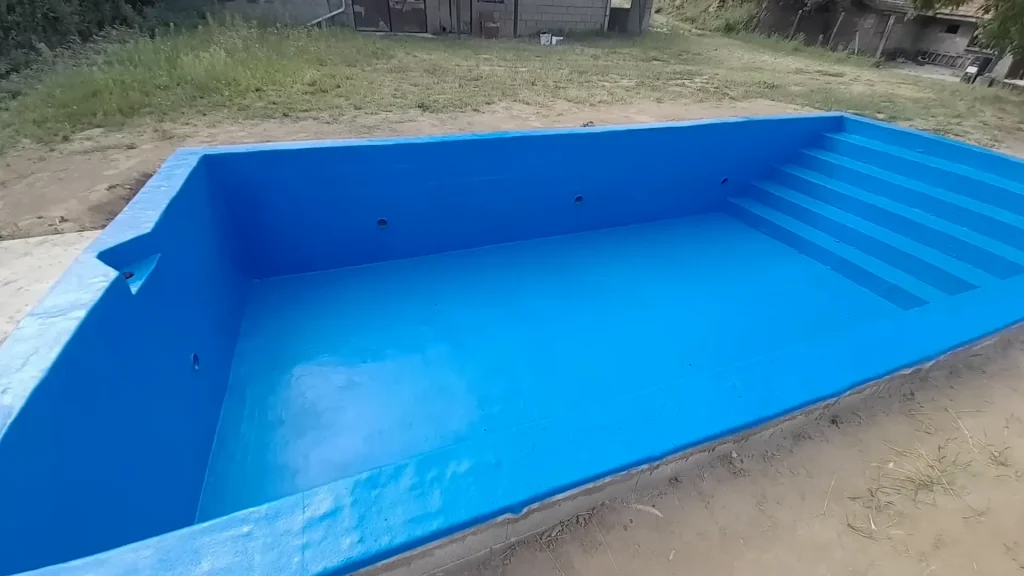
One of the biggest factors that determines whether a precast or custom plunge pool is suitable isn’t the size of your backyard. It’s whether the installation equipment can safely reach the site.
A standard suburban block may be ideal for a precast pool, while a narrow inner-city property or steep block may be better suited to a custom build. Assessing access early helps avoid unexpected costs and delays later in the project.
Can Machinery Reach Your Backyard?
Before recommending a pool type, your builder will assess how equipment can access your property. This includes checking available space, overhead obstructions, site levels and neighbouring structures.
Precast Crane Installation Checklist
Because precast plunge pools arrive as a single concrete shell, a mobile crane is required to lift the pool into position. Your property should generally have:
- A clear area for the crane to set up on the street or driveway.
- Safe access for the delivery truck.
- No overhead powerlines or low-hanging trees obstructing the lift.
- Sufficient clearance for the crane boom to reach the installation area.
- Stable ground to support the crane’s outriggers.
Every site is different, so the crane size will depend on the weight of the pool and the lifting distance.
Custom Pool Access Checklist
Custom concrete plunge pools are often the better solution for properties with restricted access because they’re built entirely on-site. Depending on the project, builders may use:
- Mini excavators for narrow side access.
- Concrete pumps or shotcrete hoses.
- Hand excavation where machinery cannot reach.
- Smaller equipment for tight urban blocks.
This flexibility allows custom pools to be constructed on sites where delivering a precast shell simply isn’t practical.
Which Pool Is Better for Difficult Access?
If your property has generous street access and enough space for a crane, a precast plunge pool is often the faster installation option.
However, if your home has a narrow side passage, sits on a steep block, or has overhead obstacles that prevent a crane from operating safely, a custom concrete plunge pool is usually the more practical choice. An experienced builder can assess these site conditions during the initial inspection and recommend the installation method that best suits your property.
Pool Cost Comparison
The cost of a plunge pool depends on far more than the pool shell itself. Installation complexity, site conditions, access requirements and your choice of finishes all influence the final investment.
In general, precast plunge pools have a lower upfront cost because the shell is manufactured off-site and installed more quickly. Custom concrete plunge pools typically cost more due to the additional engineering, labour and construction involved.
| Cost Factor | Precast Plunge Pool | Custom Concrete Plunge Pool |
|---|---|---|
| Pool Shell | Lower | Higher |
| Installation Time | Shorter | Longer |
| Labour Costs | Lower | Higher |
| Engineering | Standard factory engineering | Site-specific engineering |
| Design Flexibility | Standard sizes | Unlimited |
| Overall Investment | Generally more affordable | Higher but fully customised |
Understanding the Real Installation Cost
When comparing quotes, make sure you’re looking at the total installed price rather than just the cost of the pool shell. A cheaper quote doesn’t always include everything required to complete the project.
A typical plunge pool installation budget may include:
| Installation Item | Typical Cost* |
|---|---|
| Excavation | $2,000–$6,000 |
| Soil removal | $1,500–$4,000 |
| Crane hire (precast pools) | $2,000–$6,000+ |
| Plumbing and filtration | Varies by equipment |
| Electrical installation | $1,000–$3,000 |
| Coping and pool surrounds | $3,000–$8,000 |
| Landscaping | Varies by design |
*Indicative costs only. Actual pricing varies depending on your site, access, pool size and finish selections.
Obtaining a detailed quote that outlines every stage of the installation helps you compare builders accurately and reduces the likelihood of unexpected costs during construction.
Which Pool Is Better for Different Backyards?
Every property is different, so the best type of plunge pool often comes down to your site’s layout, access and how you plan to use the space. While both options can work in many situations, one may be more practical depending on your backyard.
| Backyard Type | Recommended Option | Why |
|---|---|---|
| Small suburban backyard | Precast | Fast installation and standard sizes suit most residential blocks. |
| Narrow side access | Custom | Built on-site without the need to crane in a complete pool shell. |
| Sloping block | Depends on the site | Both are possible, but the best option depends on engineering and access. |
| Inner-city property | Custom | Better suited to restricted access and confined work areas. |
| Large backyard | Either | The decision usually comes down to budget and preferred design. |
| Luxury outdoor entertaining area | Custom | Greater flexibility for premium finishes and bespoke features. |
| Investment property | Precast | Faster installation and a more predictable overall cost. |
There isn’t a one-size-fits-all solution. A precast plunge pool may be the ideal choice for a straightforward suburban block with good access, while a custom concrete pool can unlock possibilities that simply aren’t achievable with a factory-built shell.
A site inspection is the best way to determine which installation method will work for your property. Factors such as access, soil conditions, available space and your design goals all need to be considered before making a decision.
Design Flexibility and Customisation
One of the biggest differences between a precast and custom plunge pool is how much freedom you have over the final design.
Precast plunge pools are available in a selection of proven sizes and shapes, making them an excellent option if one of the standard designs suits your backyard. While the shell itself is fixed, you can still personalise the finished pool through your choice of interior colour, coping, paving, decking, landscaping and pool equipment.
Custom concrete plunge pools offer far greater design flexibility because they’re built specifically for your property. Every aspect of the pool can be tailored to complement your home, outdoor entertaining area and lifestyle.
Custom concrete plunge pools allow you to incorporate features that would be difficult or impossible to achieve with a factory-built shell. Popular options include:
- Integrated bench seating.
- Entry steps and tanning ledges.
- Built-in spa areas.
- Infinity or negative-edge designs.
- Custom shapes and depths.
- Water features and LED lighting.
- Premium interior finishes and tiling.
If your priority is a quick installation with a well-designed, proven layout, a precast plunge pool is often the most practical choice. However, if you have a specific vision or want your pool to become a standout architectural feature, a custom concrete pool provides almost unlimited design possibilities.
Durability and Long-Term Maintenance
Both precast and custom plunge pools are built from reinforced concrete, making them durable, long-lasting investments when they’re properly constructed and maintained. The main differences lie in the finish, ongoing upkeep and how repairs are carried out over time.
Routine maintenance is similar for both pool types and generally includes:
- Cleaning the pool and skimmer basket.
- Testing and balancing the water chemistry.
- Inspecting the pump and filtration system.
- Brushing pool surfaces to prevent algae build-up.
- Servicing equipment as recommended by the manufacturer.
The lifespan of either pool depends on the quality of the construction, equipment and ongoing maintenance. Well-built concrete plunge pools can provide decades of reliable use, with some interior finishes requiring resurfacing after many years of normal wear.
If you’re considering additional features such as heating or a mineral water system, it’s also worth thinking about long-term running costs and maintenance requirements. Choosing quality equipment from the outset can reduce repairs and improve efficiency throughout the life of the pool.
Environmental Impact
If sustainability is important to you, both precast and custom concrete plunge pools can be designed to minimise their environmental impact. Their smaller size alone means they generally use less water, fewer chemicals and less energy than a traditional swimming pool.
Precast plunge pools also offer some environmental advantages during construction. Because the shell is manufactured in a controlled factory environment, material waste is often reduced and the amount of on-site construction is minimised.
Regardless of the construction method, there are several ways to improve the long-term efficiency of your plunge pool:
- Install an energy-efficient variable-speed pump.
- Use a pool cover to reduce evaporation and heat loss.
- Consider solar or energy-efficient pool heating.
- Choose LED lighting to lower electricity consumption.
- Maintain balanced water chemistry to reduce chemical use and equipment wear.
Ultimately, the way a pool is operated has a greater impact on its environmental footprint than whether it’s precast or custom. Choosing efficient equipment and following a regular maintenance routine will help reduce water, energy and chemical consumption over the life of the pool.
Long-Term Property Value
A well-designed plunge pool can do more than improve your lifestyle. It can also enhance the appeal and value of your property, particularly in Brisbane where outdoor living is a major consideration for many buyers.
Both precast and custom plunge pools can contribute positively to resale value when they’re professionally installed and complement the home. Buyers are often attracted to outdoor spaces that are functional, low maintenance and ready to enjoy.
A precast plunge pool may appeal to homeowners looking for a practical, space-efficient solution with lower ongoing maintenance. A custom concrete pool, on the other hand, can become a standout feature that adds a premium feel to the property, especially when it’s integrated with landscaping, entertaining areas and high-end finishes.
While no pool guarantees a specific return on investment, choosing a design that suits your home and block is generally more important than simply choosing the most expensive option. A pool that looks like it was always meant to be there is far more likely to add long-term value than one that feels oversized or out of place.
Pros and Cons
Both precast and custom plunge pools offer excellent durability and long-term performance. The right choice depends on what’s most important to you, whether that’s installation speed, design flexibility, budget or site conditions.
Precast Plunge Pools
Pros
- Faster installation once the site is prepared.
- More predictable construction timeline.
- Generally lower overall cost.
- Factory-built under controlled conditions.
- Ideal for standard suburban backyards.
Cons
- Requires truck and crane access.
- Limited to available sizes and shapes.
- Less flexibility for unique designs or challenging sites.
Custom Concrete Plunge Pools
Pros
- Fully customised size, shape and depth.
- Better suited to narrow, sloping or difficult blocks.
- Easily incorporates premium features such as spas, infinity edges and custom seating.
- Designed specifically for your property.
Cons
- Longer construction time.
- Higher upfront investment.
- More on-site construction and labour.
| If your priority is… | Best Choice |
|---|---|
| Fast installation | Precast |
| Lower upfront cost | Precast |
| Standard suburban block | Precast |
| Limited site access | Custom |
| Sloping block | Custom (often) |
| Unlimited design | Custom |
| Premium outdoor area | Custom |
Neither option is inherently better than the other. A precast plunge pool is often the best choice if your property has suitable access and you’re looking for a quicker, more cost-effective installation. A custom concrete plunge pool is better suited to homeowners who want complete design freedom or need a solution for a more complex site.
Common Installation Mistakes to Avoid
Installing a plunge pool is a significant investment, so avoiding common mistakes early can save time, money and unnecessary stress. Many of these issues can be prevented with proper planning and a thorough site assessment.
1. Choosing a Pool Before Checking Site Access
A pool may fit your backyard on paper, but that doesn’t always mean it can be installed. For precast pools, limited crane access, overhead powerlines or narrow streets can quickly become major obstacles. Always confirm access before deciding on the pool type.
2. Comparing Quotes on Price Alone
The cheapest quote isn’t always the best value. Some builders may exclude important items such as excavation, crane hire, electrical work or landscaping. Make sure you’re comparing complete installation costs rather than just the price of the pool shell.
3. Skipping the Soil Assessment
Ground conditions affect how a plunge pool should be engineered. Reactive clay, rock or sloping blocks may require additional structural work, so understanding your site’s conditions early helps avoid costly surprises during construction.
4. Forgetting About Pool Equipment
Your filtration system, pump and other equipment need a practical location with adequate access for future servicing. Planning this during the design stage makes maintenance much easier after installation.
5. Choosing the Wrong Pool Size
It’s easy to focus on fitting the largest possible pool into your backyard, but bigger isn’t always better. Consider how you’ll actually use the space, allowing enough room for paving, seating, landscaping and easy movement around the pool.
6. Not Planning for Future Access
Pool pumps, filters and heaters need adequate space for servicing. Hiding equipment behind retaining walls or in confined spaces may look tidy initially but can make future maintenance more difficult and expensive.
Taking the time to plan each stage carefully will help your project run more smoothly and ensure your plunge pool suits both your property and your lifestyle for years to come.
Which Pool Should You Choose?
Both precast and custom plunge pools offer excellent durability, functionality and long-term value. The best choice comes down to your property’s characteristics, your budget and what you want from your outdoor space.
A precast plunge pool is likely the better option if you:
- Want a faster installation.
- Prefer a more predictable project timeline.
- Have suitable access for a delivery truck and crane.
- Are happy choosing from standard pool sizes and shapes.
- Want a cost-effective concrete pool.
A custom concrete plunge pool may be the better fit if you:
- Want complete control over the pool’s size, shape and depth.
- Have a narrow, sloping or difficult block.
- Plan to include features such as a spa, infinity edge or integrated seating.
- Want the pool to be designed specifically for your home and outdoor area.
Ultimately, there isn’t a one-size-fits-all answer. A standard suburban block with good access may be ideal for a precast installation, while a challenging site or bespoke design may justify the additional time and investment of a custom concrete pool.
Conclusion
Choosing between a precast and custom plunge pool doesn’t have to be complicated. An experienced builder can assess your property’s access, soil conditions, available space and design goals before recommending the most suitable solution.
At Plunge Pools Brisbane, we install both precast and custom concrete plunge pools across Brisbane and the surrounding areas. Whether you’re considering a fast-installed precast plunge pool or a fully customised concrete design, our team can assess your property, explain your options and recommend the solution that best suits your backyard and budget.
Contact Plunge Pools Brisbane today to arrange a site assessment and receive expert advice tailored to your property and project goals.
Frequently Asked Questions
How long does it take to install a plunge pool?
The timeline depends on the type of pool and your site’s conditions. Once the site is prepared, a precast plunge pool can often be installed within a few days. A custom concrete plunge pool usually takes several weeks because it’s built, cured and finished on-site.
Are precast plunge pools cheaper than custom pools?
In most cases, yes. Precast plunge pools generally cost less because they’re manufactured in standard sizes and require less on-site construction. Custom pools involve additional labour, engineering and design work, which increases the overall cost.
Can a precast plunge pool be installed on a sloping block?
Yes, in many cases. However, the installation method will depend on the site’s slope, crane access and engineering requirements. Some steep or difficult blocks may be better suited to a custom concrete pool.
Which type of plunge pool lasts longer?
Both precast and custom concrete plunge pools are designed to provide decades of service when they’re professionally built and properly maintained. The quality of the installation and ongoing maintenance have a greater impact on lifespan than the construction method itself.
Can precast plunge pools be customised?
Although the concrete shell is manufactured in standard sizes and shapes, you can still customise many aspects of the finished pool. Popular options include interior colours, coping, paving, decking, landscaping, lighting, heating and water treatment systems.
Do I need council approval to install a plunge pool?
Approval requirements vary depending on your location and the scope of the project. Your pool builder can advise whether building approval is required and ensure the installation complies with Queensland pool safety and fencing regulations.
Can I install a plunge pool myself?
Installing a concrete plunge pool is not a DIY project. Excavation, engineering, plumbing, electrical work and lifting equipment all require specialist knowledge and licensed professionals to ensure the pool is installed safely and correctly.
Which plunge pool is easier to maintain?
Both pool types require similar maintenance, including regular cleaning, water testing and equipment servicing. Because many precast plunge pools are smaller, they often require less water, fewer chemicals and less time to maintain than larger custom pools.
What type of access is required for installation?
Precast plunge pools require sufficient access for both a delivery truck and a mobile crane. Custom concrete pools are generally more suitable for properties with restricted access because they’re constructed on-site using smaller equipment and concrete pumps.
Which option adds more value to a home?
Both can enhance the value and appeal of a property when they’re professionally installed. The best return often comes from choosing a pool that suits the size, style and layout of your home rather than selecting the most expensive option.